

TikTok Told You Wrong: Juneteenth Is a Black American Holiday. Full Stop.
by Mr. Well-Travelled

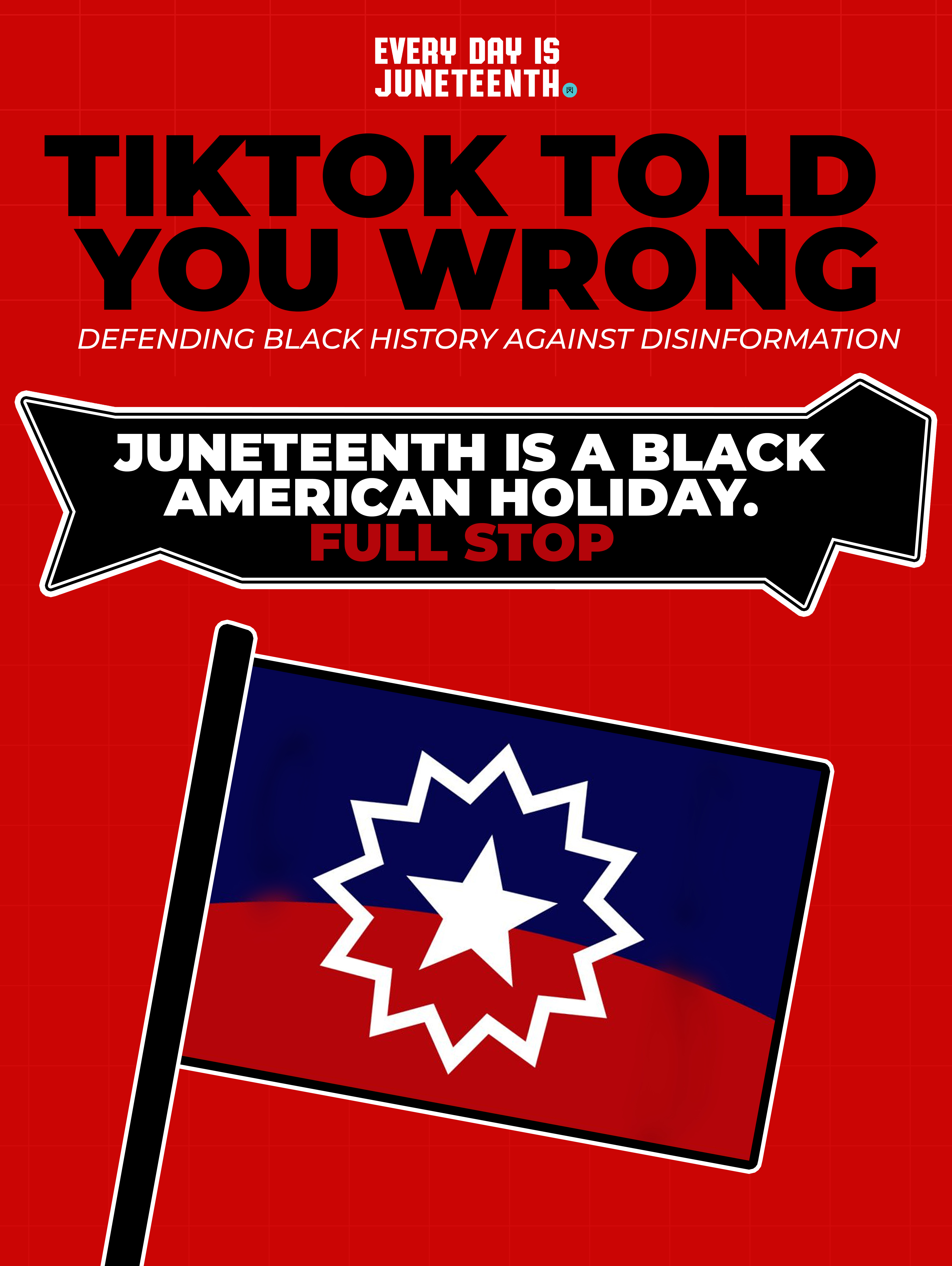
There are several TikTok videos claiming that Juneteenth is not a Black American holiday but actually a Pan-African celebration for the entire African Diaspora. This is not only false but deliberately misleading.
Last month, there was a viral post on Threads insisting that “Juneteenth isn’t enough” and that the entire month should be renamed Black Liberation Month, which now is now being recognized in some users’ comments and posts in place of Juneteenth.
On the surface, this might seem like harmless cultural blending, but this is actually an erasure of Black American history and Black Texas history in the name of global Blackness.
Let’s be clear. Juneteenth marks June 19, 1865—the day enslaved Black people in Texas finally learned they were legally free, more than two years after the Emancipation Proclamation. The first Juneteenth celebrations occurred in Texas. It’s a celebration born out of slavery, delayed freedom, and Black resistance in Texas. This is a Black American story and specifically a Black Texan story.
That doesn’t mean people outside Texas—or even outside the U.S.—can’t celebrate it. But celebrating a tradition is not the same as redefining it. What we’re seeing today isn’t just cultural appreciation. It’s revision, rebranding, and in many cases, replacement.
It's time to push back. Here are 10 questions to ask in response to someone on TikTok saying Juneteenth isn't a Black American holiday.
1. Do you know what Juneteenth actually commemorates?
Juneteenth marks the day Union troops arrived in Galveston, Texas in 1865 to enforce the Emancipation Proclamation—two and a half years after it was signed. Over 250,000 Black people were still enslaved in Texas. Juneteenth is not symbolic—it marks a real and delayed liberation. It’s not about all Black people everywhere. It’s about a very specific injustice faced by Black people in the U.S., and specifically in Texas.
2. Can a holiday be inclusive without erasing its origins?
Yes—but only when the core history remains intact. Juneteenth can be a moment for global Black solidarity, but it must first be grounded in the history of Black Texans. We don’t strengthen diaspora ties by flattening or diluting cultural specificity. True inclusion comes with honoring the root, not rewriting it.
3. Why are Black American traditions always the ones being redefined or rebranded?
Black American culture is often hyper-visible and widely imitated, but rarely protected. From music genres to language to holidays, Black American innovations are routinely repackaged by brands, influencers, and even other cultural groups—often without credit or care. Rebranding Juneteenth isn’t harmless—it continues a long legacy of cultural exploitation.
4. What message does it send when Black American DJs and music are excluded from Juneteenth events?
It tells Black Americans: Even your own history isn’t safe from replacement. Music genres like gospel, blues, jazz, funk, R&B, hip hop, and country music were invented by African Americans and have global influence. If Juneteenth events don’t reflect that history by playing Black American music, they aren’t celebrating freedom—they’re showcasing how quickly cultural erasure can happen under the guise of inclusion.
5. Have you listened to the oral histories and family traditions of Black Texans who’ve celebrated Juneteenth for generations?
Black Texans kept Juneteenth alive for over 150 years—before it became a national holiday. Family cookouts, parades, church services, and community festivals all served as acts of remembrance and resistance. That history can’t be replaced by an event flyer with vague language about “Black liberation.” Listening to their stories is the first step toward respectful celebration.
6. Why does Pan-Africanism sometimes look like replacing Black American culture instead of standing in solidarity with it?
True Pan-Africanism builds bridges between people of African descent—it doesn’t erase one group to uplift another. When Pan-African aesthetics (like flags, fashion, and music) dominate Juneteenth events without any acknowledgment of Black Texan and Black American history, it shifts from solidarity to substitution. That’s not unity—that’s disrespect.
7. Is your version of Juneteenth rooted in history—or in aesthetics?
Symbols are powerful—but empty without context. Ankara print, red-black-green flags, and curated Afrobeats playlists may look celebratory, but if attendees can’t explain what happened on June 19, 1865, or why Texas was the last holdout, then the event is style over substance. A holiday can evolve—but it must stay anchored in its origin.
8. What’s the harm in remixing Juneteenth?
Without historical grounding, people start believing Juneteenth is just a generic Black celebration—detached from slavery, the Civil War, and systemic delay in Black freedom. That kind of myth-making leaves space for disinformation and appropriation. When the meaning is diluted, so is the urgency for justice it represents.
9. Who profits from rebranding Black American holidays and traditions?
Corporations, social media influencers, and cultural institutions that adopt symbols, such as the Juneteenth flag, will end up benefitting more financially than actual descendants of Black Texas freedmen. Rebranding Juneteenth into something more “palatable” or “universal” allows non-Black or non-American audiences to consume the holiday without reckoning with the history of chattel slavery—or uplifting the communities who made the holiday meaningful in the first place.
10. How do we celebrate together without erasing anyone?
By acknowledging where the tradition comes from, who created it, and why it matters. Juneteenth doesn’t need to be rebranded to be relevant—it needs to be respected. We can celebrate Black freedom and resilience across the diaspora without flattening our differences. Anyone on TikTok posting the opposite is telling you wrong and participating in the erasure of Black History and Black Texas History for clicks, controversy, and control.
Don’t fall for it.
ABOUT THIS SERIES
TikTok Told You Wrong is a new Patreon and Substack essay series from Every Day Is Juneteenth that defends Black History against disinformation. BECOME A SUPPORTER on Patreon or Become a Subscriber on Substack to make sure you don't miss the next post.
BOOK RECOMMENDATION
On Juneteenth by Annette Gordon-Reed
